Wikipedia
This text was copied from Wikipedia on 22 April 2024 at 5:10AM.
The Earl of Arlington | |
|---|---|
 Portrait by Peter Lely c. 1674 | |
| Keeper of the Privy Purse | |
| In office 1661–1662 | |
| Preceded by | Earl of Ancram |
| Succeeded by | Charles Berkeley |
| Personal details | |
| Born | (1618-01-30)30 January 1618 |
| Died | 28 July 1685(1685-07-28) (aged 67) |
| Spouse | Isabella de Nassau |
| Parent(s) | Sir John Bennet of Dawley, Dorothy Crofts |
| Education | Westminster School |
| Alma mater | Christ Church, Oxford |
Henry Bennet, 1st Earl of Arlington, KG, PC (1618 – 28 July 1685) was an English statesman.
A supporter of the Royalists during the English Civil War, he joined the royal family in exile before returning to England at the Restoration in 1660. He gained political influence over the following decade and became one of Charles II's key advisors as a member of the Cabal ministry from 1668. He was impeached in 1674. He was a leading figure in the Court faction in the Parliament of England, a grouping which would evolve into the Tories.
Background and early life
He was the son of Sir John Bennet of Dawley, Middlesex, by Dorothy, daughter of Sir John Crofts of Little Saxham, Suffolk. He was the younger brother of John Bennet, 1st Baron Ossulston; his sister was Elizabeth Bennet who married Sir Robert Carr (or Kerr). He was baptized at Little Saxham, Suffolk, in 1618, and was educated at Westminster School and Christ Church, Oxford. He gained some distinction as a scholar and a poet, and was originally destined for holy orders. In 1643, he was secretary to Lord Digby at Oxford, and was employed as a messenger between the queen and Ormonde in Ireland.[1]
Subsequently, he took up arms for the king, and received a wound on the bridge of his nose in the skirmish at Andover in 1644. The scar resulting from this wound must have been prominent because Arlington took to covering it with black plaster. After the defeat of the royal cause he travelled in France and Italy, joined the exiled royal family in 1650, and in 1654 became official secretary to James, Duke of York on the recommendation of Charles, who had already been attracted by his "pleasant and agreeable humour".[1] He was said by some to have been the father of an illegitimate child by Lucy Walter.
Knighthood
In March 1657, he was knighted, and the same year was sent as Charles's agent to Madrid, where he remained, endeavouring to obtain assistance for the royal cause, until after the Restoration. On his return to England in 1661 he was made keeper of the privy purse, and became the prime favourite. One of his duties was the procuring and management of the royal mistresses, in which his success gained him great credit. Allying himself with Lady Castlemaine, he encouraged Charles's increasing dislike of Clarendon; and he was made secretary of state in October 1662 in spite of the opposition of Clarendon, who had to find him a seat in parliament. He represented Callington from 1661 until 1665, but appears never to have taken part in debate.[1][2]
Biography
.jpg)
| Naturalization of Lady Isabella Arlington Act 1666 | |
|---|---|
| Act of Parliament | |
 | |
| Long title | An Act for naturalizing of Isabella of Nassaw, Wife of the Right Honourable the Lord Arlington, One of His Majesty's Principal Secretaries of State. |
| Citation | 18 & 19 Cha. 2. c. 2 |
| Dates | |
| Royal assent | 18 January 1667 |
He served subsequently on the committees for explaining the Irish Act of Settlement 1662 and for Tangier. In 1665 he obtained a peerage as Baron Arlington,[3] (properly Harlington, in Middlesex) and in 1667 was appointed one of the postmasters-general. The control of foreign affairs was entrusted to him, and he was chiefly responsible for the attack on the Smyrna fleet and for the Second Anglo-Dutch War,[1] during which he married the beautiful (and Dutch) Isabella van Nassau-Beverweert (28 December 1633 – 18 January 1718) in March 1665. Isabella was the daughter of Louis of Nassau, Lord of De Lek and Beverweerd, the natural son of stadtholder Maurice of Orange. They had one daughter, Isabella FitzRoy, Duchess of Grafton (c.1668-1723). Lady Arlington's sister Emilia, another noted beauty, married Thomas Butler, 6th Earl of Ossory.[4]
In 1665 he advised Charles to grant liberty of conscience, but this was merely a concession to gain money during the war; and he showed great activity later in oppressing the nonconformists.[1]
Death of Thomas Wriothesley
On the death of Thomas Wriothesley, 4th Earl of Southampton, whose administration he had attacked, his great ambition, the treasurership, was not satisfied; and on the fall of Clarendon, against whom he had intrigued, he did not, though becoming a member of the Cabal Ministry, obtain the supreme influence which he had expected; for Buckingham first equalled, and soon surpassed him, in the royal favour. With Buckingham a sharp rivalry sprang up, and they only combined forces when endeavouring to bring about some evil measure, such as the ruin of the great Ormonde, who was an opponent of their policy and their schemes. Another object of jealousy to Arlington was Sir William Temple, who achieved great popular success in 1668 by the conclusion of the Triple Alliance; Arlington endeavoured to procure his removal to Madrid, and entered with alacrity into Charles's plans for destroying the whole policy embodied in the treaty, and for making terms with France. He refused a bribe from Louis XIV, but allowed his wife to accept a gift of 10,000 crowns; in 1670 he was the only minister besides the Roman Catholic Thomas Clifford, 1st Baron Clifford to whom the first secret treaty of Dover (May 1670), one clause of which provided for Charles's declaration of his conversion to Catholicism, was confided; and he was the chief actor in the deception practised upon the rest of the council.[1]
Personal views
He supported several other measures—the scheme for rendering the king's power absolute by force of arms; the "stop of the exchequer", involving a repudiation of the state debt in 1672; and the Royal Declaration of Indulgence the same year, "that we might keep all quiet at home whilst we are busy abroad." On 22 April 1672 he was created an earl, with a special remainder that the title would pass to his daughter, and on 15 June obtained the Order of the Garter; the same month he proceeded with Buckingham on a mission, first to William at The Hague, and afterwards to Louis at Utrecht, endeavouring to force upon the Dutch terms of peace which were indignantly refused, failing to end the Third Anglo-Dutch War. But Arlington's support of the court policy was entirely subordinate to personal interests; and after the appointment of Clifford in November 1672 to the treasurership, his jealousy and mortification, together with his alarm at the violent opposition aroused in parliament, caused him to veer over to the other side.[1]
Declaration of indulgence
He advised Charles in March 1673 to submit the legality of the declaration of indulgence to the House of Lords, and supported the Test Act of the same year, which compelled Clifford to resign. He joined the pro-Dutch party, and in order to make his peace with his new allies, disclosed the secret treaty of Dover to the staunch Protestants Ormonde and Anthony Ashley-Cooper, 1st Earl of Shaftesbury. Arlington had, however, lost the confidence of all parties, and these efforts to procure support met with little success. On 15 January 1674 he was impeached by the Commons, the specific charges being "popery", corruption, and the betrayal of his trust – Buckingham in his own defence having accused him the day before of being the chief instigator of the French and anti-Protestant policy, of the scheme of governing by consent. But the motion for his removal, owing chiefly to the influence of his brother-in-law, the popular Lord Ossory, was rejected by 166 votes to 127. His escape could not, however, prevent his fall, and he resigned the secretaryship on 11 September 1674, being appointed Lord Chamberlain instead. In 1675 he made another attempt to gain favour with the parliament by supporting measures against France and against the Roman Catholics, and by joining in the pressure put upon Charles to remove James from the court. In November he went on a Mission to The Hague, with the popular objects of effecting peace and of concluding an alliance with William and James's daughter Mary. In this, he entirely failed, and he returned home completely discredited.[5]
Treasurership
He had again been disappointed with the treasurership when Danby succeeded Clifford; Charles having declared "that he had too much kindness for him to let him have it for he was not fit for the office". His intrigues with discontented persons in parliament to stir up opposition to his successful rival came to nothing. From this time, though lingering on at court, he possessed no influence, and was treated with scanty respect. It was safe to ridicule his person and behaviour, and it became a common jest for "some courtier to put black patch upon his nose and strut about with a white staff in a hand in order to make the king merry at his expense". He was appointed a commissioner of the treasury in March 1679, was included in Sir William Temple's new modelled council the same year, and was a member of the inner cabinet which was most immediately formed. In 1681 he was made Lord Lieutenant of Suffolk.[6]
Death and inheritance

He died on 28 July 1685, and was buried at Euston, where he had bought a large estate and had carried out extensive building operations.[6] His residence in London was Arlington House, which he constructed when his previous residence Goring House burned down in 1674, this residence would be succeeded by Buckingham House which became Buckingham Palace.[7]
His title passed, by special remainder, to his only daughter Isabella. In 1672, when she was four or five years old she married the nine-year-old Henry FitzRoy, 1st Duke of Grafton, natural son of King Charles II by Lady Castlemaine.[6] The ceremony was repeated in 1679, presumably to allow the couple to cohabit. They had one son Charles FitzRoy, 2nd Duke of Grafton. Grafton was killed at the Siege of Cork in 1690. Isabella in 1698 remarried Sir Thomas Hanmer, 4th Baronet. She died in 1723.
Gallery
- Members of the Cabal Ministry
-
 Thomas Clifford, 1st Baron Clifford of Chudleigh (1630-1673).
 -
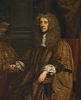
 Henry Bennet, 1st Earl of Arlington (1618-1685).
 -
 George Villiers, 2nd Duke of Buckingham (1628-1687).
 -
-
 John Maitland, 1st Duke of Lauderdale (1616-1682).


References
- ^ a b c d e f g Yorke 1911, p. 558.
- ^ Ferris, John P. "History of Parliament Online".
- ^ Alan Marshall, 'Bennet, Henry, first earl of Arlington (bap. 1618, d. 1685)’, Oxford Dictionary of National Biography, Oxford University Press, 2004; online edn, Jan 2008.
- ^ "Isabella Bennet". geni_family_tree. 28 December 1633. Retrieved 17 March 2023.
- ^ Yorke 1911, pp. 558–559.
- ^ a b c Yorke 1911, p. 559.
- ^ Harris, John (1968). Buckingham Palace. De Bellaigue, Geoffrey, Millar, Oliver, 1923-2007. London: Nelson. ISBN 0-17-141011-4. OCLC 38229.
Attribution:
- This article incorporates text from a publication now in the public domain: Yorke, Philip Chesney (1911). "Arlington, Henry Bennet". In Chisholm, Hugh (ed.). Encyclopædia Britannica. Vol. 2 (11th ed.). Cambridge University Press. pp. 558–559.
9 Annotations
First Reading
Pauline • Link
from L&M Companion
cr. Baron Arlington 1665, Earl 1672 (1618-85). Diplomatist and politician; Keeper of the Privy Purse 1661-2; Secretary of State 1662-74; also (inter alia) Commissioner of Prizes 1664-7, Admiralty Commissioner 1673-9, Tangier Commissioner 1680-4. His association with Ned Montagu did nothing to endear him to Pepys, but, that apart, he was to Pepys--as to most of his contemporaries--pompous, over-ambitious and lacking in solid ability. He rose to power by court intrigue and the favour of royal mistresses, and used it to promote the catholicising policies of the King. His career was at its height during the Cabal ministry when the Secret Treaty of Dover (1670) was made with Louis XIV, but after his attempted impeachment in 1674, he ceased to exercise any real influence. He was received into the church of Rome on his deathbed. In his biographer's words, his conscience 'could have accommodated itself easily to the necessity of bowing in the house of Rimmon, though for a lifetime'. His London house was Goring (later Arlington) House, on the site of Buckingham Palace. He spent lavishly both on that and on his great country house at Euston, Norf.
His wife (b. Isabella van Beverweerd, m. 1666) lived until 1718.
Pedro • Link
Arlington (Benett)…Antonia Fraser…King Charles II.
"Arlington had little in common with the magisterial figures who had supported, advised and even overborne the young King in exile. Twelve years older than the King, ten years younger than Clarendon, he was in essence a civil servant. Clarendon wrote of him crossly that "he could dictate; he could not lead". But Arlington could also serve, and that was the type of man that the King was beginning to need in an age where the theoretical rights of King and Parliament were amorphous, yet their practical relationship had to be hammered out day after day.He was given the Privy Purse in October 1662 when he replaced the ageing Nicholas as Secretary of State.
Arlington had a particular love and interest in Spain, having begun his career on a diplomatic mission there in 1657. Soon affairs of Spain, France, Portugal and Holland were channelled through him rather than the other Secretary of State, Sir William Morrice; Arlington took advantage of his knowledge of languages, an attribute not shared by his English contemporaries. With his rich dress, like that of a Spanish grandee, his air of formality described as "his Castilian bearing", a strange piece of sticking-plaster across his nose (relic of a war wound), Arlington was something of an outward oddity in the Court of King Charles. But the intimacy he soon enjoyed with the King was based on usefulness: he was given lodging from which he could easily reach the royal apartments by private staircase. As time would show, it was the subservient Arlington, and not Clarendon, who represented the type of King's advisers in the future."
Pedro • Link
Bennet and Spain.
Bennet's appointment to Secretary of State was not popular with many as he had spent several years in Spain. He had negotiated a secret treaty returning Jamaica and Dunkirk to Spain, when Charles was in exile. Since the Restoration he had been trying to get the King to honour it. The French Ambassador regularly refered to him as "The Spaniard".
jeannine • Link
Some additional links on Bennet, the first has additional background information and the second portraits.
http://en.wikipedia.org/wiki/Henr…
http://www.npg.org.uk/live/search…
jeannine • Link
From Grammont's footnotes
Henry Bennet, Earl of Arlington, principal secretary of state, and lord-chamberlain to King Charles II.: a nobleman whose practices, during that reign, have not left his character free from reproach. Mr. Macpherson says of him, that he "supplied the place of extensive talents by an artful management of such as he possessed. Accommodating in his principles, and easy in his address, he pleased when he was known to deceive; and his manner acquired to him a kind of influence where he commanded no respect. He was little calculated for bold measures, on account of his natural timidity; and that defect created an opinion of his moderation that was ascribed to virtue. His facility to adopt new measures was forgotten in his readiness to acknowledge the errors of the old. The deficiency of his integrity was forgiven in the decency of his dishonesty. Too weak not to be superstitious, yet possessing too much sense to own his adherence to the church of Rome, he lived a Protestant in his outward profession, but he died a Catholic. Timidity was the chief characteristic of his mind; and that being known, he was even commanded by cowards. He was the man of the least genius of the party; but he had most experience in that slow and constant current of business, which, perhaps, suits affairs of state better than the violent exertions of men of grea parts." -- Original Papers, vol. i. Lord Arlington died July 28, 1685
http://www.pseudopodium.org/repre… see note 90
Second Reading
Bill • Link
Henry Bennet, earl of Arlington, secretary of state and lord chamberlain to Charles II. was educated at Christ-Church in Oxford, where he distinguished himself by several pieces of poetry, which are printed in different collections of occasional verses. In the reign of Charles I. he was one of the under-secretaries to George, lord Digby, secretary of state; and afterwards entered a volunteer into the royal army, where he received many honourable wounds. He followed the fortunes of Charles II. with whom he was long a wanderer; and was employed by him in several embassies, before and after the Restoration. He had an uncommon talent at raillery and ridicule, and employed these low arts to undermine the credit of the lord chancellor Clarendon; and when his own credit began to decline, the same arts were returned upon himself. He was one of the cabinet council, notorious by the name of the Cabal, to which much of the political infamy of this reign will for ever adhere. They advised the king to shut up the exchequer, and persuaded him that his interest was unconnected with that of his people. Ob. July 28, 1685, Æt. 67.
---A Biographical History of England. J. Granger, 1779.
Bill • Link
Created Baron of Arlington, 1663, and Viscount Thetford and Earl of Arlington, 1672; he was also K.G., and Chamberlain to the King. Ob. 1685. His daughter and sole heir married the first Duke of Grafton.
---Diary and correspondence of Samuel Pepys, the diary deciphered by J. Smith. 1854.
Bill • Link
BENNET, HENRY, first EARL OF ARLINGTON (1618-1685), member of Cabal ministry; grandson of Sir John Bennet, educated at Westminster and Christ Church, Oxford; joined royal forces as volunteer; travelled in France and Italy; agent of Prince Charles at Madrid, 1658; keeper of privy purse after Restoration; secretary of state, 1662-74; M.P.; centre of opposition to Clarendon, 1663; created Lord Arlington, 1663; probably ultimately responsible for outbreak of first Dutch war; arranged conclusion of triple alliance, 1668; member of Cabal; arranged secret treaty of Dover, 1670; peer and K.G., 1672; unsuccessfully impeached in House of Commons as instrument of the king's evil measures, 1674; lord chamberlain, 1674; spent his last years in retirement.
---Dictionary of National Biography: Index and Epitome. S. Lee, 1906.
San Diego Sarah • Link
Another fabulous character, who blends into the woodwork while steering the ship. He was probably a paid representative of Spain for most of his life, and a Catholic if only be inclination until the very end when he was accepted into the Church of Rome. Yet he married a Dutch Protestant from the Orange party, and almost single handedly caused the Second Anglo-Dutch War. It's so much easier to say what he did than comprehend who he was.
https://www.historyofparliamenton…